

Call / WhatsApp for Free Quote


 09-
Jun-
2026
09-
Jun-
2026 If you've spent any time on social media recently, you've probably seen headlines that sound like the beginning of another global travel crisis.
A rare virus. International travelers. Cruise ships. Health alerts. Quarantines.
Let's be honest—after everything the world experienced during COVID-19, those words tend to trigger alarm bells.
The latest concern involves hantavirus, specifically an outbreak linked to the expedition cruise ship MV Hondius that attracted international attention and prompted monitoring by health authorities.
Naturally, travelers have questions:
The good news is that current evidence suggests this situation is very different from COVID-19.
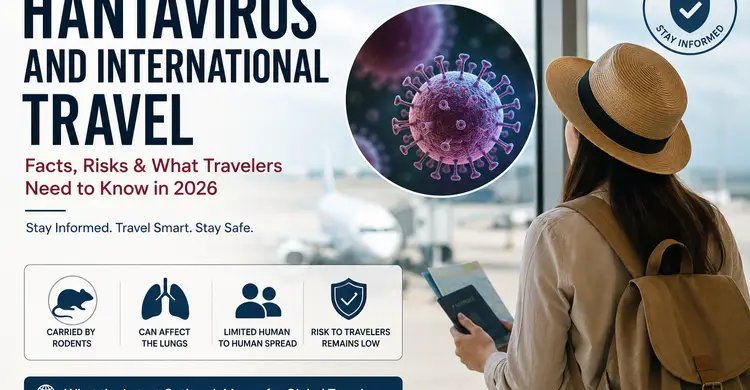
While hantavirus is a serious disease that deserves attention, global health authorities currently assess the broader public health risk as low, and there are no recommendations to cancel international travel because of the outbreak.
Hantavirus is not a new virus.
In fact, scientists have been studying hantaviruses for decades.
The virus is primarily carried by rodents and usually spreads to humans through exposure to:
That means the most common risk factor is exposure to environments where infected rodents are present—not standing beside another traveler at an airport.
This distinction is important because it immediately separates hantavirus from highly contagious respiratory diseases such as COVID-19 or influenza.
Most people will never encounter hantavirus during their lifetime.
The disease remains rare globally, although some strains can cause severe illness if infection occurs.
The recent concern stems from a cluster of infections linked to the cruise ship MV Hondius.
Health investigations identified the virus involved as the Andes strain of hantavirus, a variant historically associated with parts of South America, particularly Argentina and Chile.
Several passengers and crew members became infected, and multiple deaths were reported.
Because passengers traveled internationally, public health agencies initiated contact tracing, monitoring, and precautionary measures across multiple countries.
Whenever a disease crosses borders and affects international travelers, media coverage naturally increases.
However, media attention and pandemic risk are not the same thing.
The outbreak became major news because of its unusual circumstances and international connections—not because it is spreading uncontrollably around the world.
Most hantavirus strains do not spread from one person to another.
The Andes virus is unique because limited human-to-human transmission has been documented.
At first glance, that sounds concerning.
But context matters.
Documented transmission generally involves:
Health authorities have not reported evidence that the virus spreads easily through normal tourism activities such as:
That's one of the key reasons experts are not treating this event as a pandemic-level threat.
Symptoms may appear between two and eight weeks after exposure.
Early symptoms often resemble common viral illnesses:
In severe cases, infection can progress into Hantavirus Pulmonary Syndrome (HPS), which affects the lungs and can become life-threatening.
Advanced symptoms may include:
The disease is serious, which is why health authorities take every confirmed case seriously.
However, serious does not automatically mean widespread.
This is probably the question most travelers want answered.
Based on current scientific evidence, experts believe this is highly unlikely.
COVID-19 spread efficiently through airborne transmission.
Hantavirus behaves very differently.
Most infections occur through exposure to infected rodents rather than widespread human transmission.
Despite extensive international monitoring, case numbers remain limited compared with what experts would expect from a virus capable of causing a global pandemic.
Health authorities quickly implemented:
These actions significantly reduce the possibility of broader spread.
Global health agencies continue monitoring the situation closely, but current assessments indicate that the broader public health risk remains low.
If recent headlines made you pause your travel plans, you're not alone.
However, current health guidance does not recommend cancelling travel to Thailand because of the hantavirus outbreak.
Explore our curated Thailand holiday options:
One of the biggest misconceptions online is that an outbreak anywhere automatically makes international travel unsafe everywhere.
That's simply not how public health risk works.
Thailand has not been identified as the source of the recent outbreak.
The country continues to welcome millions of international visitors and remains one of Asia's most popular tourist destinations.
There are currently no travel advisories recommending that tourists cancel trips to Thailand because of hantavirus.
Whether you're visiting:
the precautions remain the same common-sense travel practices that have always been recommended.
Sometimes social media makes the world look like it's permanently on fire.
Fortunately, most travelers discover that reality is considerably calmer than their news feed.
If you're planning a Kochi to Thailand trip, your focus should remain on the travel risks that are statistically far more common than hantavirus.
These include:
These are risks travelers encounter every year regardless of current headlines.
For most tourists, practical precautions are simple:
That's generally sufficient for normal tourism activities.
For the overwhelming majority of travelers, the answer is no.
Current evidence does not support cancelling holidays, honeymoons, family vacations, or business trips because of the outbreak.
Being informed is wise.
Being aware is responsible.
But there is a significant difference between caution and panic.
At the moment, the facts support caution—not panic.
Current evidence suggests casual contact during normal air travel presents a very low risk.
No. The outbreak has been linked to a specific travel-related event and is not associated with general tourism activities in Thailand.
Current public health guidance does not recommend cancelling travel plans because of the outbreak.
Thailand continues to be one of the world's most visited destinations and remains open to international travelers.
Based on current evidence, experts consider that unlikely due to major differences in transmission patterns.
The recent hantavirus outbreak deserves attention.
Health authorities are right to monitor it closely.
But travelers should separate facts from fear.
Current evidence suggests:
The world is still open.
Thailand is still welcoming visitors.
And most travelers can continue exploring with confidence—armed with something far more useful than panic: accurate information.
Whether you're planning a family holiday, honeymoon, group tour, or a quick tropical escape, our team can help you choose the perfect Thailand itinerary.
The information presented in this article is based on updates and guidance published by international public health organizations and reputable news sources.
Travel health situations can evolve over time. Travelers are encouraged to consult official health authorities and destination-specific travel advisories before departure.